

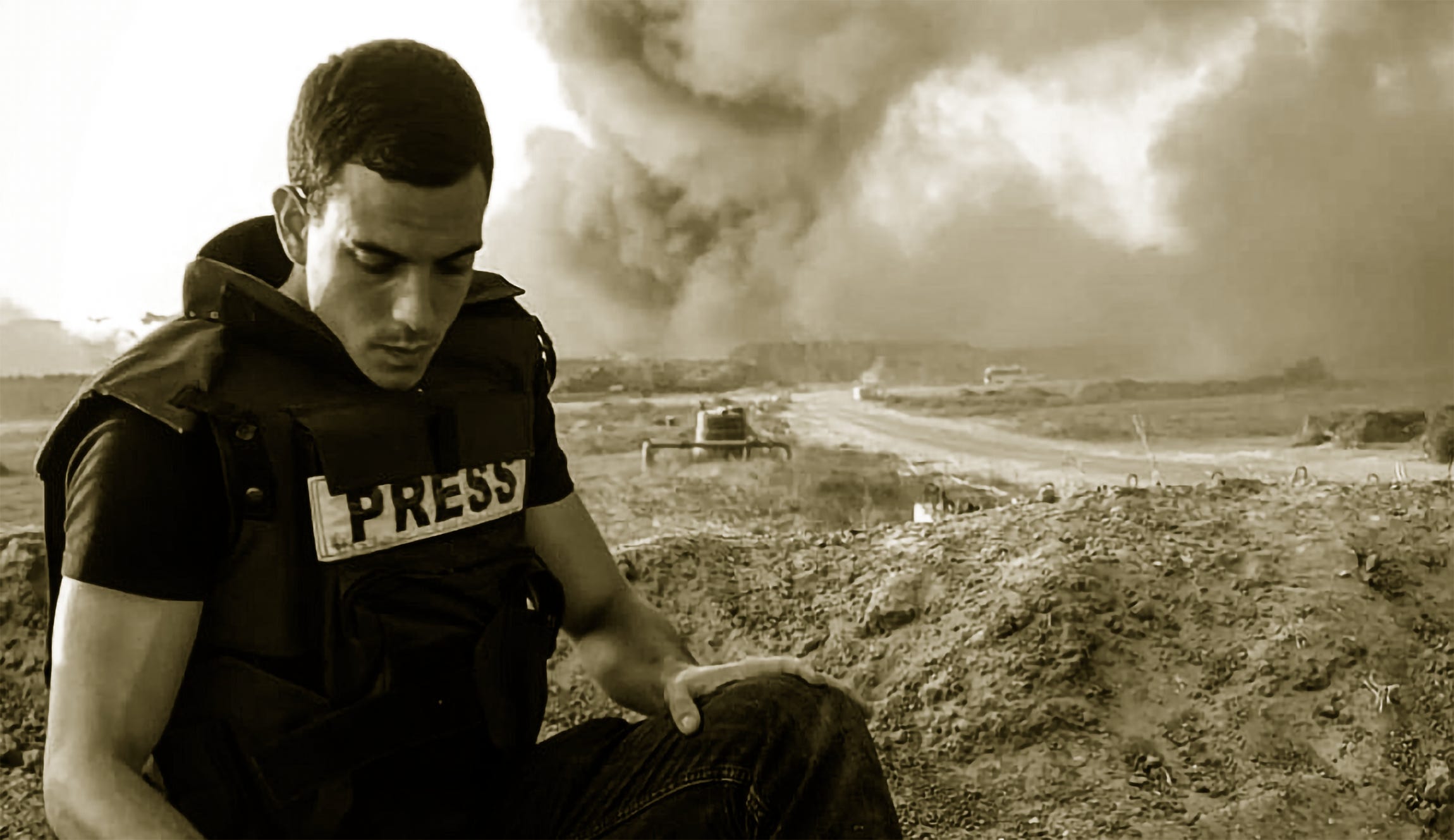

When I was young, I imagined myself as a television journalist riding in the back of a jeep in the Middle East, covering war stories. Why the back of a jeep instead of driving or sitting next to the driver? I have no idea. I’ll admit that I always want to know who’s behind me.
We’d barrel through explosions as the jeep crushed through broken roads strewn with rebar, rubble, and mines. I’d type my reports on an old Underwood because that’s how old I am, and we didn’t have the Internet when I was in college.
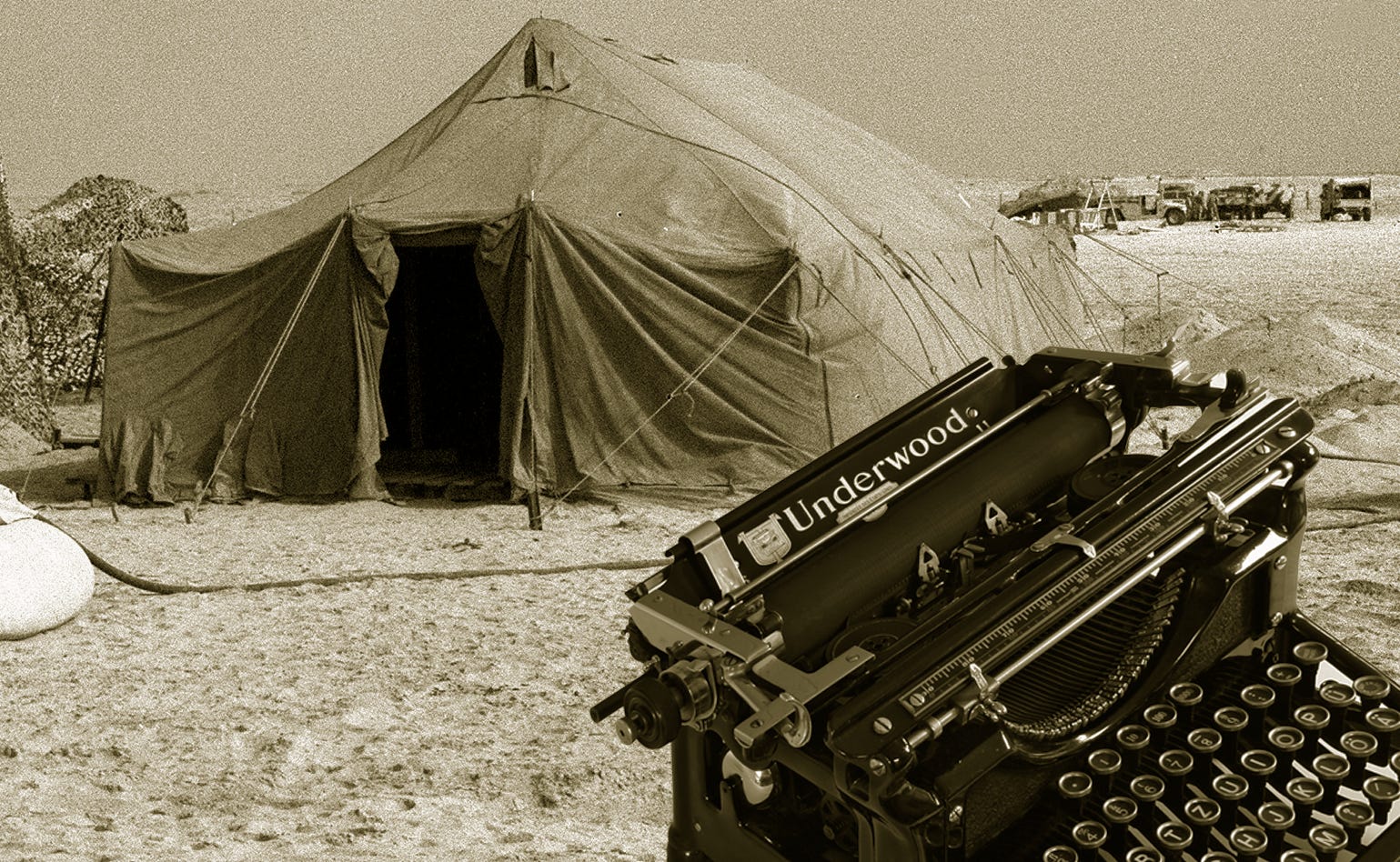


Looking back, that’s about the last thing I’d want to do.
Luckily, I was saved by a burning car.
When I arrived at my dorm as a college freshman, I was so green I could have been mistaken for an alien. I felt terrorized by the sudden onslaught of new faces. I was intimidated by everything from the tall white towers of my dorm complex to its wild-eyed denizens. And I didn’t know how to talk to girls.
I was saved by the bowl. Almost the minute after my father dropped me off, a grunge dude walked into my room about ten years before Grunge was a thing. He was carrying a DIY pipe made from a coat hanger, the kind with a cardboard tube at the bottom.
“Smoke a bowl?” he asked me with a stupid smile.
Well, that changed everything. The terrifying dorm floor became my domain in an instant. Shortly after that, my fear of girls fled to the point that when I noticed my current favorite in an elevator that had just opened, I leapt over two guys wrestling in front of it so that I could join her.
With that, she gave me an unforgettable, knowing smile that only women seem to be capable of.
We drank Schnapps at the football game a week later, tequila sunrises on weekend nights, and talked about everything as if we were the masters of our destinies in ways that could never be altered.
It wasn’t the pot that did all this. It was the way a rough-and-tumble-looking guy walked into my room and offered me a bowl when I was buried in uncertainty. I felt accepted, not by the pot, but by the human who offered it to me.
Still, pot in those days was a unifying force.
One day, before the first semester started, the residence assistant (RA) knocked on the door of one of the smoky rooms. I answered the door because I was closest to it. I knew smoke would pour out of the room, but I was stoned and I didn’t care.
I looked at the guy on the other side of the door and profiled him immediately. I could barely see his glasses through the long brown hair that covered his face and fell below his shoulders. “Cool,” I thought. He was one of us, even though we all looked different.
“Hey, I’m Craig, the RA,” he said, extending his hand.
Oh, shit.
Maybe he noticed my expression. “It’s cool, I brought my own bowl and weed,” he said.
From there, my crowd of friends expanded quickly to include people from other dorms.
One of them was a guy in student government who was angling to be president of the Student Union. We got to be good friends. We connected on every level, but we were introduced to each other through a colorful bong named The Rainbow Demon after a Uriah Heep song.
We often talked for hours long after everyone else had crashed. We both were political nerds. My parents were pretty hard-core racists. I had been opposed to their attitudes for as long as I can remember, getting into frequent shouting matches over the insanity of such a peculiar trait.
The only time I’ve come close to sort of kinda wanting to hit a woman was when my mom used the N-word at the dinner table during one of those heated exchanges. All I could do was stalk off to my room after screaming at her.
Despite my antipathy toward their racism, when my parents dropped me off at college, I was left there with centrist leanings. I never really equated Republicanism with racism. I knew nothing about the Southern Strategy. I was a political nerd without the commensurate knowledge (some people who read my rants today might argue that hasn’t changed).
My interest in politics leaned more toward international politics, anyway. And in those days, we all believed in social welfare. The tax tables looked quite different than today. The Republican president in power when I was in middle school and early high school, Richard Nixon, created the Environmental Protection Agency and proposed a national health care system. And I thought Vietnam was Johnson’s mistake.
My student union friend, whom I’ll call Tony, introduced me to a new wilderness that is generally known now as progressive politics. He was virulently pro-LGBTQ+ (although that acronym was not in use). I later found out he married a man, so that makes sense in retrospect.
He and another friend cured me of homophobic tendencies I grew up with that had been nurtured more by the rough crowd I hung with in high school than by my parents, who seemed oblivious to it all (other than my dad’s Liberace jokes).
He was an anti-war environmentalist with the kind of solid debating skills to back it up.
By the time I returned from a three-week journalism seminar in London, where the highlight was a long visit with Amnesty International in a messy room piled high with books and reports from around the world, I was an equal partner with Tony’s belief system.
Next stop: the student newspaper, which was a daily with a decent reputation in professional journalism circles.
I was on my way to that jeep.
One of my first news stories involved a campaign stop by a local congressman. I deftly reported that he was handing out campaign materials near the voting booths. The editor loved how I casually squeezed that bit of info into the story without editorializing. Nobody else noticed it, but I was thrilled that she did.
I did a few more stories like that. I became adept at sneaking in bits of information that reflected the shady character of some of the people I reported on in the local city government. I started getting a minor reputation in the “newsroom.”
I was starting to hear the jeep’s engine idling as it waited for me.
One day, one of the newspaper photographers entered the newsroom, which was in a converted house occupied at all hours by at least a couple of people. I was there early that morning after midnight, typing out a story on the electric typewriter, which in those days was high technology.
“Check this out,” he said as he handed me a photo he had taken the previous evening of a burning car that didn’t look much different than this one:
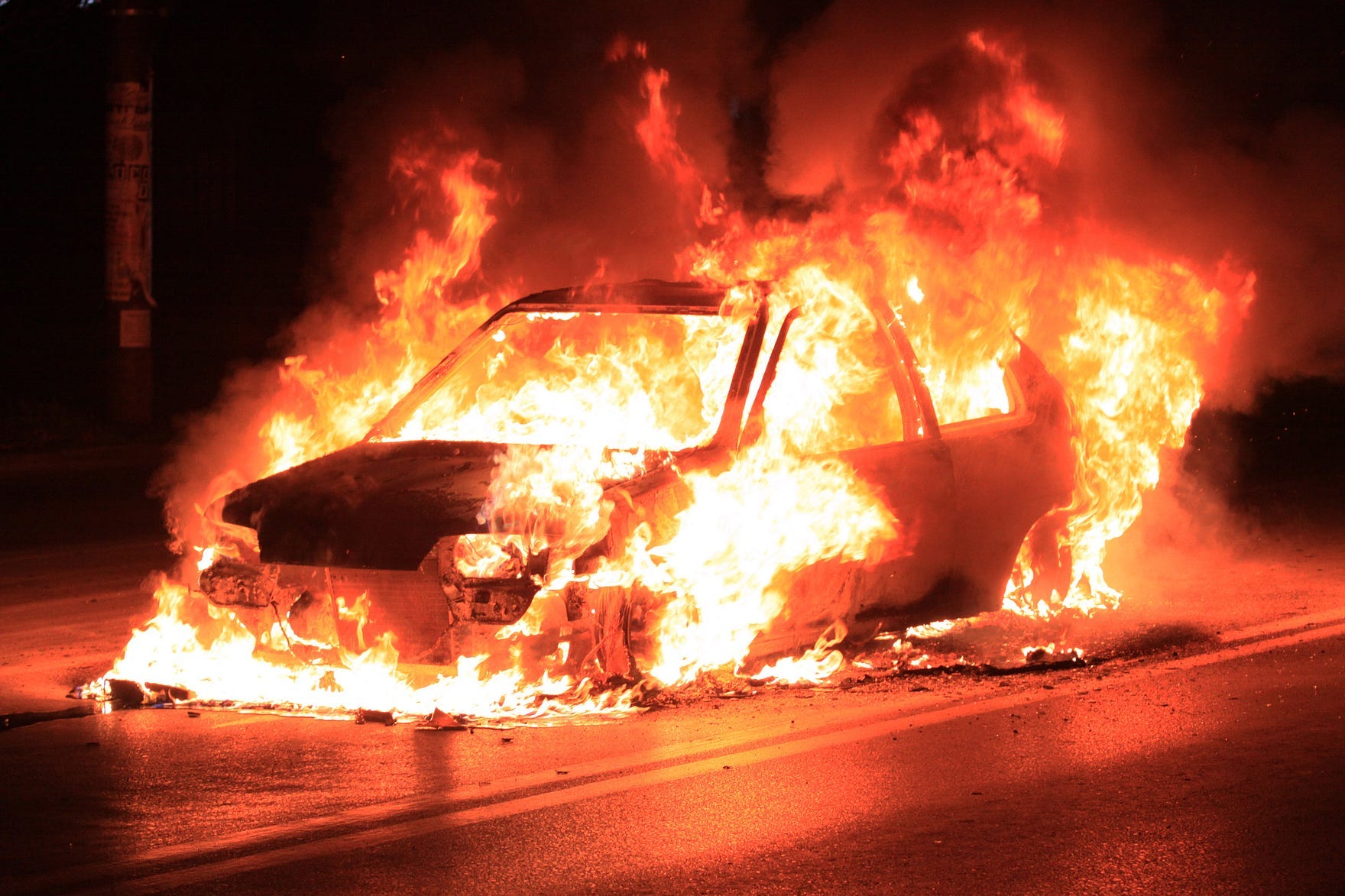
“It’s Tony Staloney’s car,” he said (I made up that last name, too). It was photojournalism gold.
“I know,” I wanted to say. I didn’t tell him I rode around in that car with a keg in the back seat with a couple of friends when we went out for a gyro one fine spring evening, happily surprised when the Greek restaurant owner said in his thick accent, “You keep that keg outside, I give you mugs. You bring inside.”
It didn’t take a lot of dot-connecting for me to figure out what had happened. Tony wasn’t a dealer, per se, but he was definitely a solid middleman. If you needed weed, Tony could get it on a moment’s notice, even if things were dry (glossary alert: dry was a 1970s term we used for when there was a tragic shortage of weed in the area).
Maybe, I thought, Tony was in a little deeper than I realized. When some friends and I wanted to try selling the stuff so we could smoke for free, we bought a pound of Columbia gold through a guy Tony introduced me to.
Spoiler alert: Our attempts at paying for our pot this way failed miserably. We smoked almost the entire thing.
I couldn’t help myself. I started calling some people. It took me about thirty minutes to discover that drug dealers had torched Tony’s car over a drug loan.
Oh, shit.
A story like this at a large public university that fed a lot of journalists to the Chicago Tribune would win an award. Full stop.
The jeep roared in anticipation of my arrival. “Hurry,” it said. “We’ve got a Middle East conflict to cover.” (Don’t we always?)
There was, however, a major problem. There wasn’t one part of me that could rat on my friend.
Game over. The jeep coughed into silence.
I still don’t know if the information I found was exactly true. Nothing came of it. The photo ran in that morning’s newspaper with a caption saying that the car belonged to a high-ranking member of the student government, but it ran without a story. It didn’t name Tony.
My friend never got in any trouble at the university after that day. He lost the presidency of the student union in a close election.
We continued to hang out. I never asked him about the burning car.
And I switched my journalism emphasis from news to advertising.
I never stopped writing, though. I’ve been writing since the third grade. I’ll probably be writing the very moment I die. But reporting wasn’t my destiny. It was left behind in a burning car.
Notes
This is not a commentary on people who have chosen journalism as a career. We all have our own experiences that affect how we walk through life. I’d be less than honest if I didn’t admit that if I was a good friend of a crooked politician, I’d have a difficult time exposing his actions in a newspaper unless they caused direct harm to people. We need journalists who won’t give that a second thought.
Journalists like the ones who give us the stories aggregated in my most recent post about the Battle for Chicago:
Toddlers Scream as Daycare Worker is Abducted, the Trump Brain Drain, and More: This Week In The Battle for Chicago

The latest news in the Battle for Chicago and other immigration fronts:
Where would we be without them? Most of them are gone now, but the Chicago Tribune has sprung to life from the ashes of a private equity buyout. Its resurgence is a beautiful thing for our current moment. The war on Chicago has strengthened Chicago journalism with other news organizations like Block Club Chicago and the Chicago Sun-Times joining the effort. I salute the journalists who are risking their lives on front lines that should not be there.


Oh, how I wish I had known you back then! Uriah Heep!? Hell yes!
Tony Staloney? 😂😂😂
Really enjoyed this!
Cool Story Charles! I can sort of relate to the dormitory scene from my days in the Air Force and arriving on base as the new guy. The one person who took the chance to see if I was cool or not is still a good friend to this day.