

I’ve never cried over a celebrity death before Sunday night.
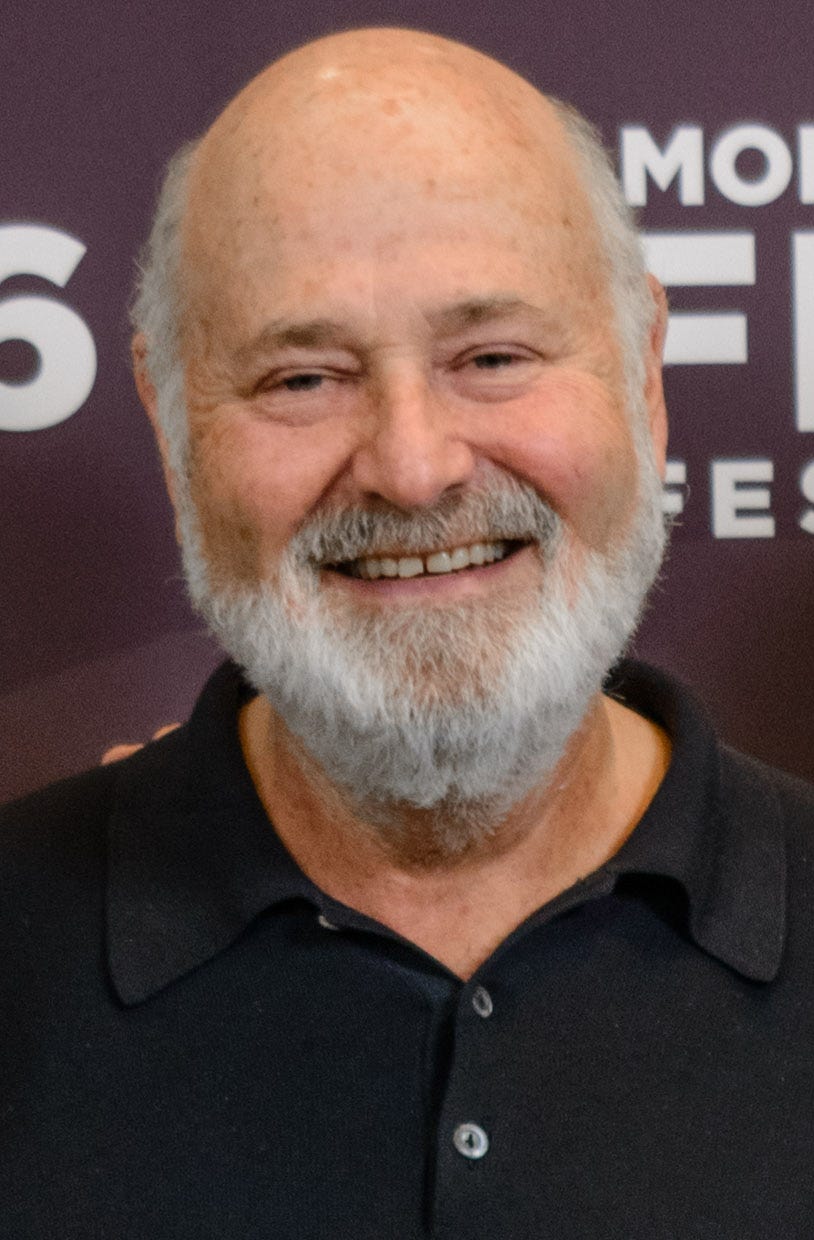
The first reports that trickled into my phone alert queue said two elderly people were stabbed to death at Rob Reiner’s home in Brentwood. Both of them were in their 70s.
I quickly googled his age because a report said that one of the persons found was 78.
That’s when I cried.
I was shocked at my reaction. Why? I wondered. Why cry? I never cry. I’m a cold fish. So that made it even stranger.
I knew his movies. Liked them just fine. But celebrity lives don’t really interest me, no matter how strong their politics align with mine.
Then it hit me.
Rob Reiner held my hand while I was growing up listening to my parents spit out the N word like it was as acceptable and normal and routine as “bread” or “butter.” I’d hear the vitriol every day, and then watch “All in the Family” with both of them every Sunday night.
I was about thirteen years old when the show first ran.
I met my first real Black friend around the same time. It didn’t go well.
He bullied me. He never took it too far, but it wasn’t smack talk, either. It was intimidation. It was a perfect opportunity for me to form hate in my mind, especially after hearing my mother’s claims about getting beaten up in school by Black kids. Especially after hearing every day about how different “they” were from “us.”
I don’t remember anything about his bullying. It never got physical.
I don’t remember how we became friends, either.
I was a captive audience for him. I remember that much. We rode the school bus together every morning. He hassled me every time. That same captive audience situation slowly changed our dynamic, although I don’t remember the details.
This much I do know: The relationship transformed to the point where one day on the way home from school, we shared dystopian thoughts. The conversation went something like this:
“If we ever have a race war, I’ve got your back.”
“Me too, you, man, me too you.”
You understand why it doesn’t matter who said what, right?
By the time I met my friend, I was already confounded by what motivated my parents’ prejudice. I didn’t go into our relationship, even after the initial bullying, disliking Black kids. Rob Reiner didn’t help me see the light. I was already there for reasons I’m not aware of.
Maybe it was rebellion against my parents. Seriously, I have no idea.
So how did Rob Reiner rescue me if I didn’t need saving?
Something miraculous happened through Rob Reiner’s portrayal of “Meathead,” Archie Bunker’s derisive way of referring to him.
My parents softened up. The “N” word disappeared. Not overnight, but by the time I headed off to college, the word was missing from their vernacular.
One day, when I told my mom my best friend in high school was coming over to hang out with me for the first time — he lived far enough away that his parents had to drive him to us — my mom didn’t react. Her face didn’t change. She knew he was Black. But no reaction.
When my friend arrived, she brought us two bottles of Coke, the kind in the cute little bottles before they changed the recipe. She brought them with a smile. She shook his hand. She welcomed him into her home.
Because Rob Reiner, you see, helped change the world. He helped make the use of the “N” word by white people ugly. But more than that, he mocked the entirety of prejudice. To be Archie Bunker was an embarrassment. The use of hate words became a launching pad to pariah status.
Norman Lear, the creator of All in the Family, helped change the world, too, of course. So did Carroll O’Connor, who played Archie Bunker. And Jean Stapleton, who played his wife Edith. So did Sally Struthers, who played Gloria, “Meathead’s” wife and Archie’s daughter.
Heroes. All of them.
But it was Michael Stivic, the character played by Reiner on “All in the Family,” who I related to growing up. Archie was my dad. Stivic, in my fantasies, was me, or at least who I aspired to be.
My dad would laugh at all their jokes, both Archie’s and Stivic’s. But it was Stivic’s jokes I wanted my dad to hear.
Stivic was the highly prejudiced Archie’s nightly antagonist, forever calling Archie out on his hate bombs. He was Archie’s son-in-law, and Archie wasn’t happy about it, but was only willing to go so far, partly because Gloria wouldn’t stand for it if he tried. Stivic and Gloria were a team. Archie knew it. He could only push so hard.
And there was something else.
Stivic would lapse into brief periods of understanding, even love for “Arch,” the name he often used during their many arguments. He taught impressionable young teens like me that you can disagree without malice. We knew when watching Stivic that he not only wanted Archie to accept him, but that he desperately wanted to like Archie, too.
Archie would usually do something to remind Stivic why accommodation was a bad idea, but one got the sense that Archie, too, was softening as the years droned on.
As Archie softened, so did my parents. So did a lot of parents.
As we consider today’s media landscape, it would do us well to remind ourselves of the media’s power in all its forms. In the case of “All in the Family,” the power to change things for the better was born out in a small, working-class home on the southern reaches of the Chicago suburbs each Sunday night.
Today, the opposite is happening. But that can change.
We just need another Michael Stivic.
Although we’ll never have another Rob Reiner.
RIP, Rob and Michele Singer Reiner.
Thank you for all that you gave me, and all that you gave my generation.

May their memory be a blessing.
Perfect column, Charles. My feelings, too.