

Here’s an interesting truth about atheists: They’re often the most moral people we know. Many of them burn with anger over the destructive hypocrisies of Christianity. It’s almost impossible to argue with them because their objections to Christianity are in many ways irrefutable.

I’ve always struggled with Christianity. It eventually reeled me in, but the type I believe in is not the Christianity the fanatics talk about.
As an organized religion, Christianity is full of the hypocrisies that atheists correctly point to. It’s easy to blame modern fundamentalists for Christianity’s foibles, but the problem started centuries ago when men pulled the vestments off women and told them they belonged at home.
If that had never happened, I believe we’d be living in a very different world.
Christianity has had 2,000+ years to get things right, and the general vibe is that it’s pretty much failed.
The many fallacies of Christianity are well documented elsewhere. In light of the bizarre focus on embryos and drag queens, and, God save us all, Trump, is it any wonder that people are fed up with a religion that appears to be led by lunatics raging over drag queens and by priests with long track records of child abuse? Why would any rational person want to break bread with these people?
The answer is, not many. Church attendance in America and Europe is at a historic low.
However, there’s something hidden in the mayhem of fundamentalism, Roman Catholicism, and the misogynist world of Southern Baptists. There’s a quiet, prayerful set of individuals who, in some cases, are religiously homeless but still practice faith daily.
Many of them go to church but remain in the background, perhaps overwhelmed by the loudmouths who govern church affairs.
I was prompted to think about this more when I read an interesting sentence in one of my morning devotionals recently:
Believers in Jesus are called to be good citizens (Romans 13:1–7), and good citizens don’t spread misinformation.
This was a specific reference to conspiracy theories. The devotional goes on (bold is mine):
Since false information can split churches and put lives at risk, checking facts is an act of loving our neighbor (10:27). When a sensational story comes our way, we can verify its claims with qualified, accountable experts, being truth seekers — not error spreaders.
I thought about Marjorie Taylor Greene and her declarations (which the press has forgotten during her rehabilitation tour) to turn the United States into a Christian nation amidst the divisive shrill of all her crackpot conspiracy theories. And I realized that something is going on that she and those like her are completely unaware of.
The day after the Supreme Court gutted affirmative action, the same devotional offered up this:
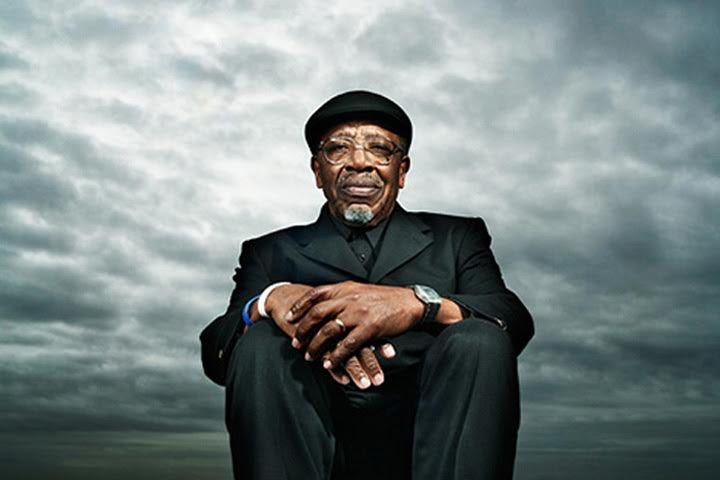
As he neared the end of his life, John M. Perkins had a message for the people he would leave behind. Perkins, known for advocating racial reconciliation, said, “Repentance is the only way back to God. Unless you repent, you will all perish.”
Whoa there, his life isn’t over yet, Ms. Devotional Writer (he’s 95 years old but still with us). Phrasing! But you get the point. And although I’d argue that God doesn’t make us perish if we don’t repent, I do know from experience that it helps our souls when we do. But Perkins, a long-time civil rights activist, is also a Baptist minister, so there’s going to be a little blood and death with his religious interpretations.
The neat thing is that a devotional like this is becoming more socially aware than it was a few years ago when I first started reading them.
I like devotionals, even when they come from questionable sources, because they keep me centered and disciplined. But I always assume that they come from a place much more fundamentalist than my perspective. So I wasn’t expecting these types of screeds. And I’m starting to detect a change in their atmosphere.
I’m not here to praise the source of these devotionals, and I’m definitely not here to evangelize. For me to counter 2,000 years of bogus teaching is a fruitless endeavor.
Instead, I thought it worth pointing out that there is a substantial movement growing within Christianity that is quietly but steadily undermining the far right that has dominated the religion for, not just the last decade, but the last 20 centuries. And it’s impacting mainstream religion in some surprising ways.
You can find some of it right here on Substack and on Medium at the Backyard Church from Dan Foster. I can say, speaking from the outside looking in, and having read a large number of its Medium stories, that it qualifies as the kind of gentle approach to faith that was fostered by Jesus. You should check out his book here if you’d like a deeper dive into his thinking (I have no Amazon affiliate status — I make no money if you buy his book):
There are many other growing movements that act as a counter to the negative messaging of most organized Christianity. They don’t receive the publicity that fundamentalists get because their messages aren’t hate-filled, so the mainstream press ignores them.
It all began when women were pushed aside
In my view, Christianity’s problems all started when male priests yanked the priesthood away from women.
I talk in more detail about that here:


The bible’s most prolific author, St. Paul, referred to females in lead roles multiple times (he also allegedly had occasional fits of misogyny, but many religious scholars say that those were edits made by later scribes). Catholic researchers, of all people, have discovered that women played a signficant1 role in the early church.
History is unclear on how, precisely, women lost their role in the church.
Some historians, like Peter Brown (see the Notes at the end of the story), trace the deterioration of women’s roles all the way back to the second century when male church leaders began to obsess over things like virginity. Others see female participation fall shortly after the reign of Justinian I, whose authoritarian tendencies were moderated by his wife, Empress Theodora.
In Justinian’s time, women still played a prominent enough role in church affairs that Justinian, with help from Theodora, felt the need to enshrine the role of women in his massive code of law (often called the Corpus Juris Civilis) that ultimately played a major role in European civil governance. Despite the code, women’s descent from church leadership accelerated almost immediately after Justinian’s death.
Others simply blame the Catholic Church.
We can argue about the how forever, but the end result is the same: By the 20th century, women’s roles in organized Christianity had largely disappeared.

Some call the emerging messages “New Left Christianity,” but to call it that makes the same mistake we often make in modern-day discourse. We think we’ve got to call it something. I call it Radical Christianity because it hews to its origins and away from the patriarchs who tinkered with Jesus’s message to the point where they turned Christianity into a devil’s brew of raging judgmentalism.
Jesus, after all, didn’t hang out with the Romans. He sought the oppressed, he sought prisoners, he sought the rejected. He asked you, the person judging someone else, to cast the first stone if your record was immaculate.
Whatever you want to call it, the best way to illustrate the emergence of a kind of Christianity reconstituted to its original intent is to reveal a few sources. I chose these because I have experience with them, but there are more if you look for them.
Plough Publishing House
This first one might be considered a bit of an outlier. Plough is the publishing arm of the Bruderhof, which is an Anabaptist group that advocates communal living. From their website:
The Bruderhof is an international movement of Christian communities whose members are called to follow Jesus together in the spirit of the Sermon on the Mount and of the first church in Jerusalem, sharing all our talents, income, and possessions (Acts 2 and 4).
They publish a monthly magazine called Plough, which is a well-written print journal that manages to promote leftist social justice positions without really scaring right-wingers the way secular leftist journals like Jacobin do.
Its emphasis is on practical economic theory that rejects the concept of Western capitalism. Its writing is a reflection on how modern capitalism chokes its majority population under the yoke of a few victors who are “able and willing” to achieve the greatest advantage.
If you download and read Plough’s graphic novel, The Grand Inquisitor, which is based on Dostoyevsky’s Brothers Karamazov, you’ll run into what might be considered socialist thinking, but Plough writers are usually smart enough to warn that socialism as historically constructed is not a bargain worth seeking, as exemplified by this passage from the book’s introduction:
Dostoyevsky depicts not some sadistic tyrant like Stalin but the best possible socialist, because he wants us to see what is wrong with the very idea of socialism or any scheme that would trade essential freedom for happiness.
Rather than rail against capitalism, Plough generally focuses on ways for us to deal with it.
Plough’s monthly magazine features an eclectic set of articles. Recent article titles include A Good Death for Dying Churches, an article about the aftermath of a power struggle that destroys a small church congregation, and Enchanted Capitalism, which begins with a discussion about how capitalism can’t survive without direct government intervention and money.
Plough refreshingly avoids any kind of sustained effort to convince its readers to join one of the world’s Bruderhof communities, which are religious communes that try to be economically self-sustaining. In fact, it’s almost a challenge to find any information about Bruderhof when perusing an issue of the magazine.
Instead, the publication encourages articles from all denominations, even those demonized by people like me.
Global Religion Journalism Initiative
The Global Religion Journalism Initiative is a joint effort between The Conversation (an online opinion publication) and the Religion News Service (RNS), which acts like a newswire and front page for religious news. RNS isn’t leftist, but it frequently challenges traditional church thinking with its headlines.
It’s lead story as I write this is this:
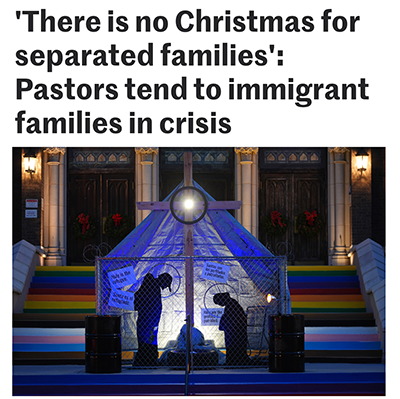
RNS also runs a wire service similar to PR Newswire that services organizations wishing to distribute press releases to news publications.
The Global Religion Journalism Initiative generates regular newsletters available by subscription. One would expect such a newsletter to expound on evangelism and rage against abortion and gays. Instead, one recent newsletter headline was: The search for gender identity, say trans seekers, brought them closer to God, which linked to the article with this message from its editor:
Pride month and religion are often at odds in the public square, with much of today’s anti-LGBTQ sentiment rooted in religious rhetoric and advanced by traditional theologies. This includes the highly publicized recent debates around drag queen story hours, LGBTQ books in school libraries and legislation around trans rights. Yet, this June, at Religion News Service, we have told a number of stories complicating the traditional adversarial narrative between religious communities and queer communities, including that of Natalie Drew, a Christian, transwoman, veteran and pacifist. And that of four trans seekers — Jewish, Muslim, Old Catholic and Episcopalian — who all say the search for their gender identity has brought them closer to God.
The interesting thing about the Religious News Service is that it reaches the closed-minded, as reflected in this comment (by someone without the courage to identify himself) in the linked article:
There are no ‘transgender’ Americans. There are damaged people resorting to cosplay in an exercise of self-dramatization. They need to be encouraged to live in reality.
This kind of reaction may seem discouraging, but the fact that the service is reaching into congregations and communities that have distorted Jesus’s teachings and teach hellfire human judgment is significant.
BioLogos
BioLogos is an organization founded by Dr. Francis Collins, who led the Human Genome Project and was the director at the National Institutes of Health (NIH) in Bethesda, Maryland, from 2009 to 2021.
Collins believes that the structure of DNA must have been created by a sentient intelligence because its patterns, although mathematical in design, are too clearly modeled with specific intent to be random. He rejects “intelligent design” and creationism, and favors scientific and evolutionary theory as part of God’s language.
BioLogos considers Genesis and much of the Old Testament a set of parables using storytelling to make a point. My own thoughts align with this, because to believe in the literalness of the Old Testament means I have to believe in a God who is a serial killer:
BioLogos sometimes takes a harder stand against atheists than I’d prefer. For example, in an argument that the concept of a multiverse is not in conflict with Christianity, one BioLogos author writes:
Sometimes people describe the multiverse or other explanations for the beginning of the universe as if these were replacements for God. In a 2013 lecture, renowned physicist Stephen Hawking said, “A combination of quantum theory and the theory of relativity would better explain our existence than divine intervention.” This is a common refrain in videos and popular books about cosmology, focusing on these scientific theories primarily as a way to eliminate God.
If the multiverse idea were merely a shorthand for an atheistic worldview, then “God or multiverse” would be an appropriate question — we would be comparing metaphysical commitments in both cases. However, Keating misportrays an entire scientific community as being motivated primarily by an anti-God bias. While this may be true for some individual scientists, he portrays the multiverse only as an alternative to God and a way to get around the fine-tuning argument.
There’s a bit of evangelizing at play here. 2,000 years of that has gotten us to where we are today. Atheists have too much to offer for us to reject their thinking out of hand. Whether or not they find God isn’t my concern. I believe in a God that helps us understand our own truth, no matter how we get there.
Luckily, the BioLogos article goes on to say:
To simply dismiss the multiverse as an atheist alternative to God is to dismiss a rigorous, mathematical structure that is driven by curiosity about the nature of matter and gravity and our universe.
This statement is meant for the writer’s audience of Christians instead of atheists. In fact, it goes directly to my point about the need to embrace the thinking of atheists (and everyone, for that matter). The dark-skinned Jesus of 2,000 years ago (as opposed to the warped white Jesus of the modern world) would be first in line to break bread with atheists, not because he’d feel sorry for them, but because they are in opposition to traditional religious thinking.
Christopher Hitchens, an influential atheist, was a close friend of Collins:
They probably had some great debates, which is becoming a lost art form in America. Hitchens held lively and warm debates with Christians he didn’t find irritating.
Sojourners
Sojourners is a religious organization focused on social justice. According to their website:
Sojourners’ ministries grew out of the Sojourners Community, located in Southern Columbia Heights, an inner-city neighborhood in Washington, D.C. The community began at Trinity Evangelical Divinity School in Deerfield, Illinois, in the early 1970s when a handful of students began meeting to discuss the relationship between their faith and political issues, particularly the Vietnam War. In 1971, the group decided to create a publication that would express their convictions and test whether other people of faith had similar beliefs. What emerged was a publication committed to social justice and peace: The Post-American.
Sojourners are Christians who follow Jesus, but who also sojourn with others in different faith traditions and all those who are on a spiritual journey. We are evangelicals, Catholics, Pentecostals and Protestants; progressives and conservatives; blacks, whites, Latinos, and Asians; women and men; young and old. We reach into traditional churches but also out to those who can’t fit into them.
The organization is heavy on themes of racial and social justice.
Their stance on ICE is unmistakable:
“Chicago Is in a State of Holy Rage” screams one of their headlines in all caps.
One recent article in Sojourners was titled “White Jesus’ Hellish Influence.” The article starts out as follows:
I DON’T KNOW if theologian Tamice Spencer-Helms can pinpoint the moment she met Jesus — she was raised in a Black church. But she remembers vividly where she met “white Jesus.” As she relates in her new memoir, Faith Unleavened: The Wilderness Between Trayvon Martin and George Floyd, Spencer-Helms met white Jesus when she was a teenager, and she met him in hell.
Her church’s inability to bear witness to her grief and fear — and by extension, their inability to bear witness to the war being waged on Black bodies — drove her to what many are calling “deconstruction.” But for Spencer-Helms, a queer Black woman, this is more than deconstruction — it’s decolonization. She finds a parallel between her experiences and those of the ancient Israelites in their journey of liberation from Egypt: After fleeing an oppressive theology, she is wandering in the wilderness, not yet home in a new faith.
Sojourners has a welcome influence from the Black church community, but it’s not a Black group.
For example, the article, “The Yassification of Christ,” about the transition of Jesus’s imagery from a dark-skinned Jesus to a white fella that fundamentalists can love, was written by a young white woman whose bio starts like this:
Olivia Bardo is a poet and baker of bread. She was born and raised along the fringes of the Appalachian Mountains in northeastern Pennsylvania…
It’s a beautiful thing.
Sojourners is a consistent advocate for progressive policies. It doesn’t waver the way some others do. For example, its opinion about affirmative action, which the right-wing Roberts Supreme Court decimated, is consistent with affirmative action’s original intent, as shown in the article, “The Moral and Religious Argument for Affirmative Action:”
As Christians, we should yearn to make our schools (and our churches, communities, and nations!) places that celebrate diverse identities as a manifestation of the image of God in all its fullness. However, we make a mistake when we argue that affirmative action policies are primarily about maintaining diversity — an argument that obscures what affirmative action policies were originally intended to address.
The author continues:
A 2019 study by researchers at Yale University found that Americans believe that Black households own $90 in wealth for every $100 held by white households. If only this were true! In reality, for every $10 of Black wealth, white Americans have $100, a heartbreaking gap that, by some estimates, could take more than a century to reverse.
The subtitle of Rev. Dr. Kelly Brown Douglas’ Sojourners article called “A Christian Call for Reparations” is:
Christian theology has been used to legitimate white supremacist realities. We must tell that truth and push forward.
The article traces the beginnings of the modern reparations movement to Ta-Nehisi Coates’ call for reparations in his seminal Atlantic article titled, “The Case for Reparations” and goes from there.
The leftward drift of Christianity isn’t limited to a few groups most of us haven’t heard of. Dr. Brown, the author of the aforementioned article, is the dean of the Episcopal Divinity School at Union Theological Seminary in Cambridge, Massachusetts.
She notes in her article:
The Episcopal Church’s Virginia Theological Seminary in Alexandria has set aside $1.7 million for a reparations fund. Princeton Theological Seminary in New Jersey established a $27 million endowed fund to address historical theft of labor and discrimination.
The Episcopal Church
This brings us to the Episcopal Church.
The rector at my local Atlanta Episcopal church is a woman. She often discusses social justice in her emails. Some of these emails even border on the kind of metaphysical stuff we expect from Tarot card readers, such as this encouragement to create a vision board:
Thanks to science, we know the power that actually visualizing an outcome can have. Athletes do this, for example, when they are preparing to play a game. There are people who make their living coaching folks to “visualize” a career outcome or life outcome, and these things actually do work. A picture stimulates the creative parts of your brain and makes it more likely that your conscious and subconscious mind will then work out the details to make that vision a reality.
Adding the spirit of a woman to church leadership leads to the opening of minds, which is a welcome thing in a state like Georgia.
Episcopal churches allow women and gays to serve as priests. The LGBTQ+ community has seen inroads in other denominations, as well:
LGBT clergy in Christianity - Wikipedia
The ordination of lesbian, gay, bisexual and/or transgender ( LGBT) clergy who are open about their sexuality or gender…en.wikipedia.org
Black Churches
This deserves its own dedicated story. Luckily, I wrote one a few years ago for the Medium platform:
Will Black Churches Change America?
The fight by Black Churches against police injustice is the polar opposite of white evangelism in the Bible Beltcharles-bastille.medium.com
So the next time you see the thunderous cries of the insane, relax, breathe, and know that a gentler movement is afoot.


And if you hate Christianity, maybe a day will come when you don’t hate it quite so damn much.
For those of you celebrating Christmas, Merry Christmas. For those of you not, I hope you have a happy holiday season no matter how you approach it.
Notes
Some sources used for this article:
Kateusz, Ally. “Women in the Early Church: A Reappraisal.” Wijngaards Institute for Catholic Research, 2019.
Brown, Peter. The Body and Society: Men, Women, and Sexual Renunciation in Early Christianity. New York: Columbia University Press, 1988.
Dunn, James D. G. “Women in the Church’s Ministry.” In The Making of Christianity: Essays on Early Christian Thought, 203–225. London: SCM Press, 2003.
Most of this article first appeared on the Medium platform.
Very nice article. Love the subtle and dry humor peppered therein. History helps. Context is in abundance.
I have used vision boards before. Got everything in them. Thought of doing another one until I heard a story about a man who got everything he prayed for and still was not happy.
Wait. What about us agnostics?
Really impressive piece! Thanks