

Some good news to end your day with. A progressive-minded publisher based in Seattle has purchased the struggling Chicago Reader and committed to honoring its founding mission as a key player in Chicago’s alternative media scene.
It may come as a surprise to some of you, but Substack isn’t the only alternative to mainstream media. For years, alternative newspapers, usually weeklies like the Chicago Reader, were the true bulwark in alternative media messaging.
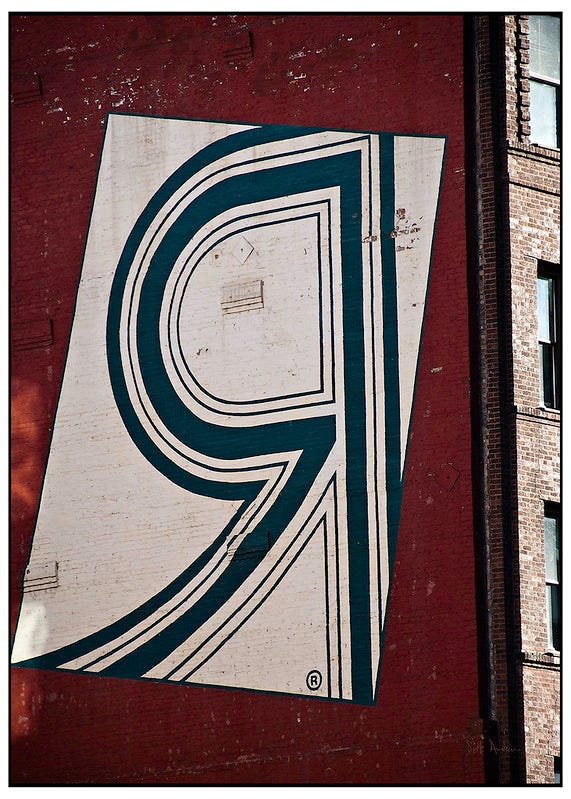
At the head of the line, at least for me, because I grew up with it, has been The Chicago Reader.
Decades ago, every Friday, when I worked downtown, I’d grab a copy lying around one of the Loop establishments for the train ride home. The free paper was full of deeply researched political stories, cultural info, especially music and local theater, as well as often caustic but fantastic movie reviews.
It was a thick little newspaper. I never came close to finishing it during the commute home. Each week, one long investigative piece usually dominated its front page. These stories were sometimes as long as 30 pages. They didn’t mess around.
It was through the Reader that I first learned about Jon Burge, a Chicago police detective who ran his own personal torture shop in a building away from local precinct headquarters on Chicago’s South Side during the late 1970s and early 1980s.
Burge and his small crew of assistants were responsible for 118 torture sessions designed to extract confessions.1
He was found guilty in 2008, in the Before Days, back when the United States had a Department of Justice willing to prosecute crimes of police brutality. He was sentenced to four and a half years in federal prison for perjury and obstruction of justice related to a civil suit brought against him by some of his 118 victims.
More importantly, his actions, and the Reader’s revelations, eliminated the death penalty in Illinois because some of the people who were killed by the state were Burge victims.
If Burge were still alive, you-know-who would probably pardon the bastard and beat his heartless chest while doing it.
On a lighter note, the Reader was also home to Matt Groening’s (The Simpsons’ creator) comic strip featuring a one-eared bunny rabbit and a charming gay couple who often spent a dozen or so comic strip frames trying to figure out life together with varying degrees of little success.
The comic strip’s gay couple had a profound impact on me, a kid growing up in a tough blue-collar south suburb, where, to put it charitably, being gay was discouraged. By the time I ran into the comic, I was already an ally to the LGBTQ+ cause, largely on the force of a close friend of mine in college. But Life in Hell certainly helped solidify my sentiments.
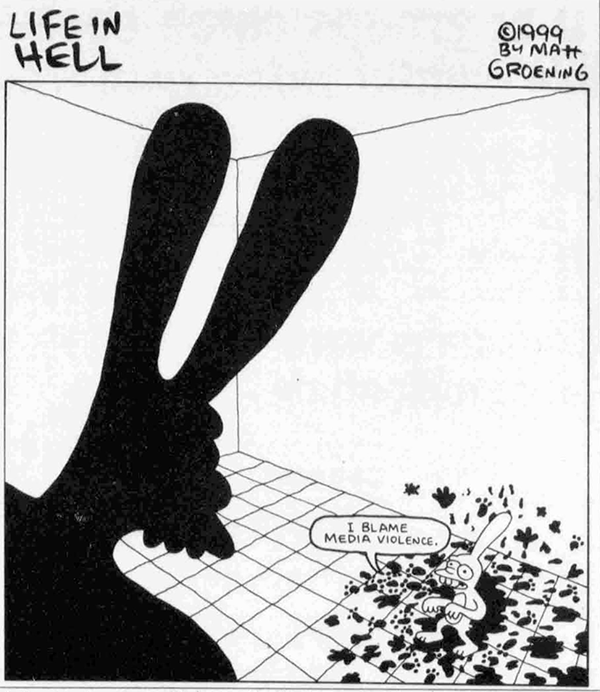
Most Chicagoans aren’t aware that Life in Hell got its start at the Los Angeles Reader, not the Chicago Reader. The Los Angeles Reader wasn’t owned by The Chicago Reader or vice versa, but it did closely follow the Chicago Reader’s format. It seems fair to guess that the Los Angeles Reader’s owner, James Vowell, who signed Groening, was an admirer of the Chicago paper of the same name.
These kinds of alternative papers were key vehicles for the resistance movements of the day, of which there were many.
The Chicago Reader maintained a lively personals section, where tiny screeds not unlike today’s modern Tweets railed against people like “Ronald Raygun.”
The paper was hugely successful at first. But like all print publications, the internet nearly drove it to extinction.
The Chicago Reader started life when a group of friends from a small Minnesota college, Carleton College,2 decided to trek down to Chicago and begin a community-oriented local paper, distribute it free to, eventually, more than a thousand locations, and feature local heroes, citizens, and, occasionally, crime lords impersonating city aldermen.
It established itself quickly in the arts crowd. An actress friend of mine who was performing at the Goodman Theater was so thrilled that the Reader stitched up a long review of the play she was in that she sang several paragraphs of the review to a few of us during a late-night breakfast at a local family diner. (Is 3 am late night, or is it morning? The debate continues. )
I laughed so hard that I think I cried a little.3
The founders held onto Reader ownership for 36 years. It brought in $22.6 million in revenue in 2002.4
The paper experienced several ownership changes after 2007, and when the internet started killing its ad platform, the current owners donated its assets to a nonprofit called the Institute for Community Journalism.
The institute tried mightily to save the paper, but had to start printing biweekly to do it. It was successful enough that it was finally able to sell it to Brady Walkinshaw’s Noisy Creek. Before running alternative newsweeklies, Walkinshaw was CEO of the environmental journal Grist, and before that, a Democratic state legislator.
Walkinshaw told the Chicago Tribune:5
“We hope what we’re doing is going to be able to give the Reader the runway that it needs…because it’s truly one of the most beloved and iconic alternative weeklies in America,” Walkinshaw said. “We have every intention to keep it hyper-local, with local leadership, local partners. What we’re bringing is capital, and a model that can support it.”
One likely reason that Walkinshaw was willing to purchase the paper was that its staff remained dedicated to its original mission. The Chicago Tribune reports that:
In 2024, the Chicago Reader covered 34 art venues, 156 performing art venues, theaters and live music, conducted 311 theater reviews, 202 film reviews, 52 visual art show reviews and published 1,627 concert announcements. Of those, 491 freelancers, many of them practicing artists, contributed over 1,500 articles.
Sometimes, we need to do a shout-out to our heroes. In this case, one of them is Ellen Kaulig, the Chicago Reader’s chief of staff, who never forgot the origin story of this fabulous piece of American media. She saved it long enough for it to be bought by someone who cares.
Say hi to everyone, Ellen:

Isn’t she wonderful?
For more info on the deal made to save the Chicago Reader, you can read this Chicago Tribune gift link:
Or, fund me one time…

Guardian staff reporter. 2018. “Ex-Chicago Police Commander Linked to Torture of More than 100 Suspects Dies.” The Guardian. The Guardian. September 20, 2018. https://www.theguardian.com/us-news/2018/sep/19/chicago-cop-jon-burge-torture-dies.
Reader, Chicago. 2025. “Chicago Reader History - 70s Success Story.” Google.com. 2025. https://sites.google.com/site/chireaderhistory/70s-success-story.
Fun story: I was watching a streaming TV show several years ago, thinking, “she looks so familiar...” It was her.
Jacob, Mark. 2021. “The Reader at 50.” Chicago Reader. October 13, 2021. https://chicagoreader.com/news/the-reader-at-50/.
Rockett, Darcel. 2025. “Chicago Reader Finds New Life with New Buyer: ‘I’m Grateful That It’s Going to Have a Future.’” Chicago Tribune. August 26, 2025. https://www.chicagotribune.com/2025/08/26/chicago-reader-buyer-noisy-creek/?share=nriyh0uathcc8ng2bi5h (Gift link)
This is so cool...I did not know about The Chicago Reader! I'm glad it survived!