The Hunt
An excerpt from the novel, Restive Souls, in which a priestess considers a unique approach in the hunt for a killer

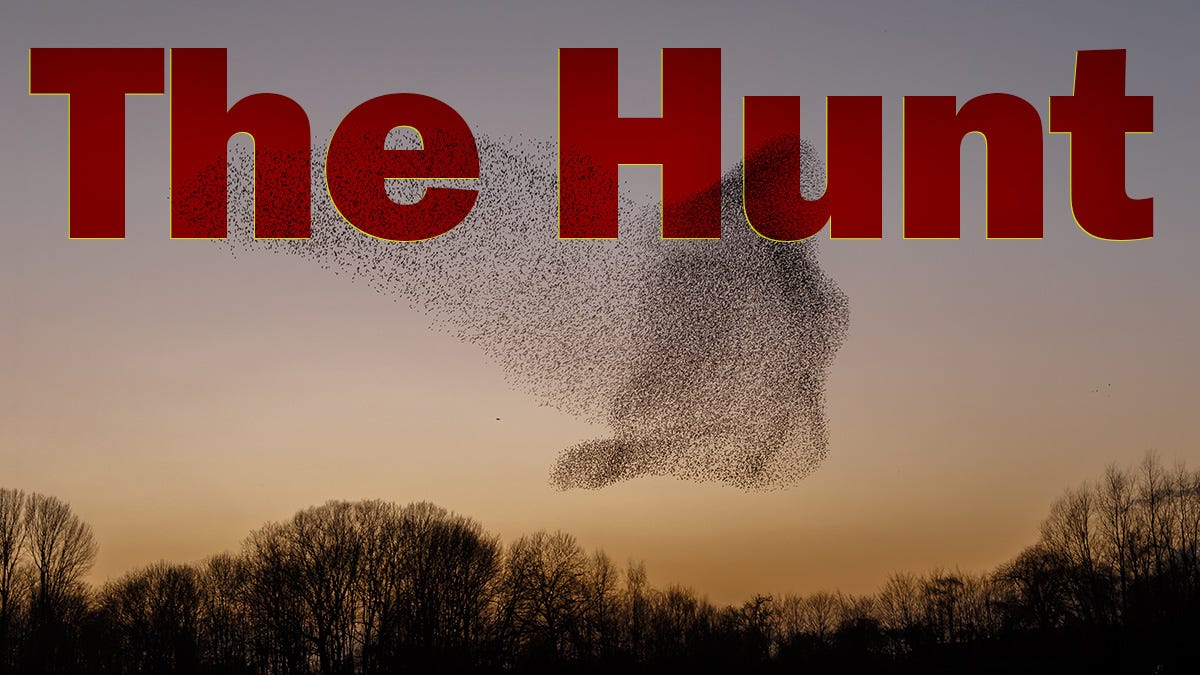
This excerpt follows the events in a previous Restive Souls excerpt called “The Assassination,” in which a Tsărăgĭ priestess on a diplomatic mission to the Carolina Union (the C.U.) was assassinated in Charleston, drawing fears of war with the Tsărăgĭ (Cherokee) nations.
The narrator is an influential priestess of the new nation (the C.U.) carved out of the failed Colonial Rebellion against the British in the late 1700s, a side effect of which is the emancipation of the slaves and a powerful presence of freed slaves in the Carolinas, and Charleston in particular.
There’s a mystery here, because the two women discussing the assassins fleeing Charleston believe they may be Tsărăgĭ renegades determined to break up diplomatic efforts between the Carolina Union and the Tsărăgĭ nations.
Bolo’s Notes are annotations made by the historian Emmet Bolo to help guide readers through the alternative history.
When I woke up about an hour later, I described the events of the day to Bedíàkyo. We sat under a black oak tree outside the residence. Beyond lay the great, crowded forest of white oaks, bur oaks, and black oaks. I didn’t see Wild Henry further up the trail in the garden, which surprised me.
We spoke over a cacophony of bird calls. Because the tall forest surrounded everything, including us, the long late summer afternoon prelude to eventide was looking darker than it was.
Bedíàkyo’s name signified a time of war. Her furious personality seemed always ready for it. She was a large woman, as tall as most men, with large, wide hips and broad, muscular shoulders. Neither her physique nor her name disguised her femininity. She had a rare gift for displaying grace at the same time as merciless condescension.
Her face was full and round. She believed she was Edo, despite her Ashanti name, but she didn’t look it. She didn’t look either to me. A long nose with a dorsal hump emerged from under two wide eyes that often looked surprised. Her hair was normally a short, finely cut topping of tight kinks and curls, but she had recently shaved her head for the Ceremony of All, which was a newly established drum circle and prayer ceremony dedicated to the forest. Her upper lip was the shape of a heart, with two glorious arcs that descended with fierce sensuality.
Her greatest skill was animal husbandry, but she was also a master of birds. She reminded me of this as we sat listening to them.
“How long do you think the hunting party has been on its search?” she asked me.
I shrugged. “Well, it’s been about four hours now, I think.”
“The rains should have slowed down the prey.” Bedíàkyo considered many things a hunt, so it was only fitting that her references to the search party were so.
“That was my thinking,” I agreed quietly.
“We should send a flock of starlings to shit on them,” she said without humor in her tone.
I looked at her without a response.
“The birds can easily find the hunting party. From there, they can find the prey, and even if they have found a haven, the birds can cover them with enough dung to ruin their trek.”
Still, I was unable to respond. My only thought was that she had shaved off a part of her brain matter along with her hair.
“You think I cannot do this,” she said as if I had just insulted her.
“I…” I still didn’t know what to say.
“Have you ever seen a fresh fall of excrement from a flock that covers the sky? They offer much harvest to the creatures of the forest and to the roots and plant life.”
“Well of course, but over time, my dear. Not all at once.”
“They can easily cover the size of a man up to his torso, if so directed. I shall husband them to the prey’s lair, or wherever it is that such criminals stand when they run from their punishment. The prey will be buried in a dung heap. Trying to hike through it will be quite difficult and unpleasant. Every bird shall choose the location of the scoundrels to release its day’s meal of beechnuts and worms pulled from the dirt, and acorns and chestnuts and berries and the fruit of the dogwood.”
“I’ve never heard of such a thing,” I finally managed.
“Either have I.” Bedíàkyo’s eyebrows were not much more than thin brown filaments, but the one on her right side would arch severely when she was making a point. “I thought of it just now.”
“It would be rather glorious to witness,” I said.
“We must halt their march to the nearest Tsărăgĭ camps.”
I nodded at this. I was in close agreement on that score.
“It will slow them down even more so than the rains, and the combination of the two will quite profoundly impact their maneuverability.”
“You talk as if such a feat is not only possible but assured.”
“Only because it is.”
“Yet you have never tried such a thing. And in fact, you are considering it now for the first time.”
“What I have learned is that I do not contemplate the impossible in matters such as this.”
What Bedíàkyo meant was that the Holy Spirit would not have suggested that she could converse with an animal if she could not.
“Such a thing reeks of magic. I’m not convinced our Lord would approve,” I laughed, running out of arguments.
“The spirits of the forest are more attuned to him than any human could hope to be. The birds could reject my request, but I think they shan’t turn away from the chance at a good shit on a shit. Besides, what have you suddenly against magic?”
“You are familiar with my hesitancies, my dear. It must be used with a graceful understanding of the common good.”
Bedíàkyo gave a stern look when she said, “This certainly qualifies as the common good. We will catch the perpetrators, and we will prevent war with the Tsărăgĭ. That seems uncommonly good.”
“You don’t require my permission to take on this task,” I replied in my own stern voice. I sometimes thought she enjoyed this kind of back and forth as a prelude to carnal pleasures. I began to wonder if I should prepare the bed linens.
“Your blessing is always preferable,” she replied.
“You always have that,” I replied, taking her hand. “Well, how can I resist?” I concurred. “I truly cannot imagine a more sacred moment than seeing the killers of that magical woman covered in bird dung.”
“You were impressed by her.”
“Very. You know how it is when we meet someone of bayi. The meeting itself permeates your soul. It is an instantaneous act, is it not?”
“Mm-hmm. She was so?”
“Yes, of that I have no doubt. It was so when I first met her, and it was so during our brief meeting today.”
“There are many among the Tsărăgĭ that are so, are there not? It would be tragic to be at war with these people. Have you heard the Kikuyu saying? When elephants fight, it is the grass that suffers. We must save our swords for the Europeans, who have no soul.”
“If swords must be drawn.”
“Too often, they must.”
“And now you propose to draw the excrement out of the mighty starling to launch a form of divine aerial attack.”
Finally, she laughed. “So that the sword be brandished upon the Tsărăgĭ priestess’s murderers, my dear.”
The thought of birds in the air used as assault weapons, even with such lowly ammunition, made me shudder. “Imagine machines in the air. I think the likes of Diderot and Tagoe are right. We must practice the same industrialization techniques as the Europeans.”
“Find a way to flying machines before they do.”
“’Tis only a matter of time before someone discovers how to send machines into the air.”
“Seems like a fanciful thing, and quite impossible. Feathers float. Metal and wood do not.”
“Says the woman who thinks she can direct a flock of millions of birds to deposit their droppings onto one spot.”
Bedíàkyo shrugged. “I never told you of the long night in the Bight of Griwhee.”
I shook my head.
“It is a legend of sorts, but it involves my grandmother. The word is passed down that my grandmother’s husband was trapped in a small cave near the Bight of Benin called Griwhee. Nobody knew this. He had been with a hunting party, none of whom returned. They had been gone a week or more, but they were supposed to be gone only for a couple of days.
“She called on Eziza for guidance. Eziza asked her, ‘What is it?’
Bolo’s Notes
In some Edo lore, rather than being a spirit father, Eziza was a mischievous god of wind who could see everything in the world at the same time.
“‘I’ve lost my husband,’” she said. ‘Can you help me find him?’
“Eziza enthusiastically responded in the affirmative. So he sent a lion to hunt for her husband’s scent. ‘I have good news,’ Eziza said a short time later. ‘The lion has found your husband, but the lion is hungry.’
“So she asked Eziza to send the lion some food so as not to devour her husband. Eziza responded by sending a herd of antelope to the cave where her husband and the lion were.
“‘I have good news,’ said Eziza. ‘The antelope have alighted in front of the cave where your husband is hiding and where the lion awaits. But upon seeing the lion, they fled.’
“‘What am I to do?’ my exasperated grandmother asked.
“Fear not. The antelope were so frightened that they left a moat of dung around the cave that the lion cannot traverse, and the stench is so strong that your clan can find your husband with its dogs.’”
“That is a child’s tale that we have all heard, you silly woman.” I shook my head at Bedíàkyo. “I grow concerned over this sudden fascination with excrement.”
If her tale was supposed to be an additional inducement of persuasion, the ploy failed, but only because I was already reluctantly convinced that she should try her desperate scheme. Or, perhaps, something similar. “What harm can come from you trying?” I asked. “But how will you speak to the birds in such a way as to move them?”
“I will pray to Eziza,” she winked.
“Well,” I chuckled, “at least it is not the favor of Baal that you seek.”
One of the advantages of my decision to return home had been that it lay on the same road north to the southern Tsărăgĭ encampments and villages that the search party would have taken if they found the killers and were comfortable riding the road upon their return.
So, when three scouts arrived on congregational grounds by horseback while we were finishing our talk, I became hopeful. Three men were astride horses that were adorned with dark navy-blue blankets under their saddles bearing orange All Saints Congregation insignia. Bedíàkyo and I heard them long before we saw them.
“What say you?” I asked as they approached us.
“Who are you?” asked one of the scouts.
“I am Shyllandrus Zulu, priestess and deacon here at the Vanguard of Mary Congregation.”
The scout, dressed in a uniform that resembled a colonial army uniform but who was clearly an Afriker, dismounted, then bowed. The disheveled uniform looked repurposed, with an insignia on the shoulder that I didn’t recognize.
“Your grace,” he said. “I am most honored. The trail has gone cold. Monsieur Diderot has requested scouts from a nearby First Settler encampment. Not a village. They be a hunting party, he thinks.”
“Which nation?”
“I am sorry, your grace, I do not know.”
I was flustered. I hadn’t expected the trail to go so cold that scouts would be sent to inform me, especially considering Adwoa’s visions of their location. “How did Monsieur Diderot know I’d be here?”
“He did not, your grace. This was the first friendly encampment on the trail. He asked me to merely pass the word into the Vanguard as I rode into Charleston.”
The scout was heavily armed, with a sheathed machete, a long pistol on a belt, and a Ferguson rifle strapped over his shoulder. His two companions were similarly equipped.
“The trail is dangerous enough to require three of you, and heavily armed?” I shuddered slightly, thinking about Wild Henry’s admonitions about traveling alone.
“We encountered nobody with an unfriendly attitude, by the grace of God.” The man was young and handsome, with a thick square jaw and a need for a shave. Each cheek bore the crease of five finely drawn elongated dimples that I hoped I could someday see shaped further by a smile. “But Monsieur Diderot, he was wary of the road. Is wary of the road. Uncertainty abounds. The scope of the battle is at this point unknown.”
“Return now to Monsieur Diderot. Tell him you have found me here and that we have a plan to expose the criminals. Tell him the sky will darken with a great flock. One greater than he has ever seen.” My next instruction came without consultation. I could only hope that Bedíàkyo could comply. “The birds will part, forming a narrow point in the sky that will provide the direction for the search.” This I knew Bedíàkyo could do. Her idea of dropping sufficient bird droppings to halt the march of men was finally too preposterous for me to advocate.
I continued. “The flock will point them in the proper direction. Monsieur Diderot’s team will need to ride their horses hard, because a good Tsărăgĭ warrior may be too shrewd not to notice this tactic. Their witness of the flock’s formation may prompt them into another direction.”
“The Ga-Adangbe would send crows for this,” said the scout boldly. “It is said that when the crow returns, his black plumage becomes white, and his white plumage becomes black, to signify that he has accomplished his mission. Much less obvious to send several crows, who can help point the way, also.”
“You are Ga?”
He nodded. The Ga and Ashanti had tussled some in the homeland. But in this land, all nations of the homeland were as one. We were all Afrikers. I nodded and smiled. “We bear much in common,” I said, focusing on our common lineage instead of conflict.
The man smiled broadly and happily. As I had anticipated, the five creases on his face revealed deep, expressive dimples. “Yes, your grace,” and he bowed again.
“What do you think of this, Bedíàkyo?”
“There is not enough time for the crows to fly to and back again. And I have never spoken to crows.”
The man nodded at this. “I shall not take up any more of your time, your grace.” He bowed again, then bowed to Bedíàkyo, and veered back toward his horse.
“Thank you,” I said. “What is your name?”
He turned around. “I never experienced the kpodsiemo ceremony. I have been called James of Spirit, I have been called James of Mast and James of Legions by my brothers and sisters.”
“I shall call you James. James of the Vanguard,” I replied with a smile.
He grinned, bowing again, and said, “I am most honored. I shall make haste now to the trackers. I pray that their trail remains fresh. You shall send the birds of the arrow?” He looked up. I saw three large black and white crows sitting on a tree branch tree not far from him, in the direction he was looking.
“Yes. Good luck with your travels.”
When he mounted his horse and the three men rode off, the crows took flight in his direction.
Notes
The paragraphs in this excerpt are reformatted to allow for more white space than the original text from the novel. If you enjoyed this, please restack it and help it land in the realm of other readers of fiction. Thanks!
Want to see how the world of Restive Souls looks in the modern world?
Check out The Trial of Summary James. A full novella free here on Substack and only 99 cents (U.S. and equivalent price outside the U.S.) on Amazon Kindle (coming soon to Inkitt and PayHip stores). Different characters, same basic timeline and alternative history.

Thanks for reading! I appreciate all my subscribers, paid, free, and those just thinking about it.
Research isn’t free. I do a lot of it. If you want to help a bit, here’s a little donation button…