

For those of you new to this short novella…
This is an alternative history murder mystery set in a modern North America where slavery ended in the late 1700s and the Trail of Tears never occurred. What sprang from that was a multicultural nation governed by a democratic theocracy. Longman Jones is a former newspaper reporter and (of course, because it’s a murder mystery) martial arts expert who sees visions of murders immediately after they take place.
Recently, one of his visions morphed from certain to possible visions. He now encounters another. His latest vision shows his friend, Hiawatha, leading a small militia, which is supposed to be illegal, in a final confrontation with the alleged mastermind of a murder and conspiracy plot.
Previous chapters can be found at the end of Chapter One.
Chapter Eighteen
This is what I see.
More detail. More nuance than ever before. Hiawatha would call it a tighter drum.
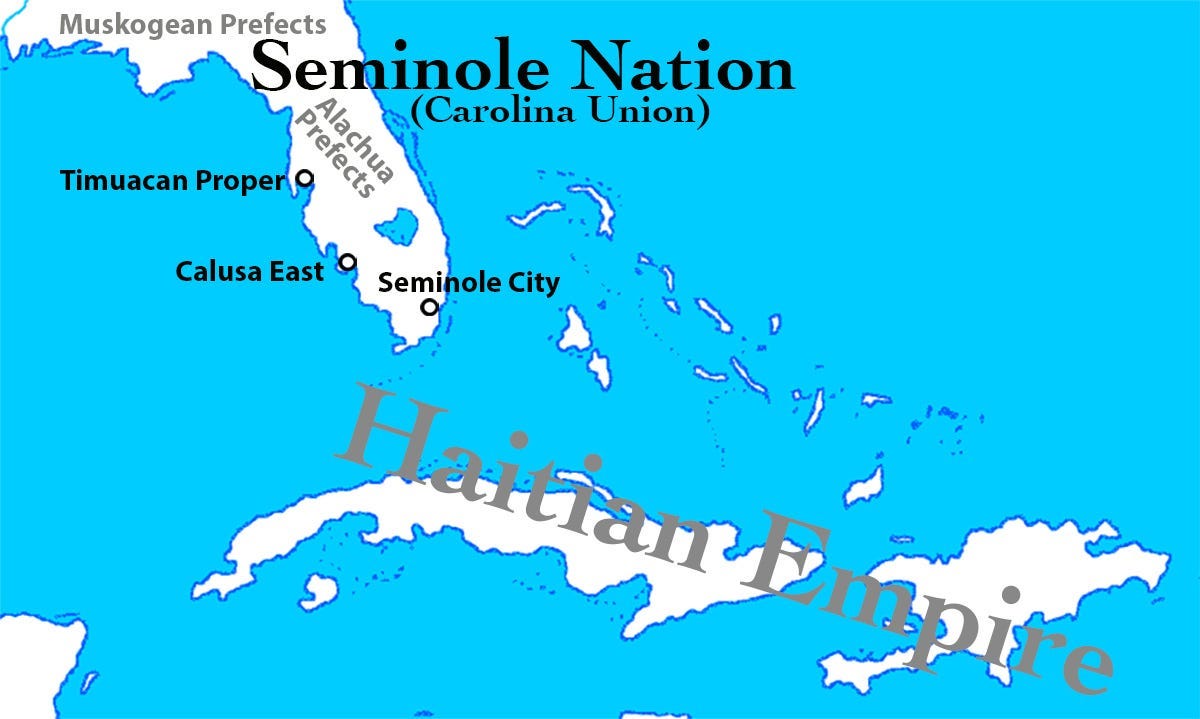
Hiawatha Smith is talking to my old buddy at the hotel run by the Brotherly Smiles Congregation in Seminole City, Richland Price. I wouldn’t call it a friendly conversation. Hiawatha doesn’t often do friendly when persuasion is needed. He shows Price a photo from his phone of Sonata Holmes. He uses colorful language to say that because of his gambling activities, Price has put this woman in danger. It’s a stretch, but I’m not there to try to mellow him out.
Price nervously responds that he wouldn’t want any harm to come to anybody. He’s just playing baseball cards. Hiawatha softens his tone. “If you knew that an action you are about to take would save your friend Longman’s girl but would mean you could never gamble on a baseball card again, would you do that?”
She’s not my girl, Hiawatha.
Price stutters momentarily before saying, “I’d stand in front of bullets for a friend of Longman’s. Bible says friends should be willing to sacrifice their lives for their friends.”
Hiawatha slams the counter with a hand and says, “That’s a good soul! Here’s what you’re gonna do.” He explains to Price that he will set up a meeting between Hiawatha and his card dealer. Price agrees, warning him to be careful.
Hiawatha Smith meets this dealer. It is not a friendly conversation. He had told me his tech was good, but I didn’t have any idea how good. He has pictures of the card dealer’s sister and her family on his phone, and he tells the dealer in very strong terms that he wants to meet the source of the baseball cards. He wants to go all the way to the top.
The dealer isn’t happy, but he’s a low-end player, like Price. All he wants is for Hiawatha Longfellow Smith to leave him alone, so he makes a phone call telling Philippe Alon that he has a very, very big customer who’d like to meet with him.
Alon isn’t happy, partly because he never is, and partly because he doesn’t like the idea of a small-time player trying to arrange a meeting with someone as important as he is. He rejects the meeting.
Hiawatha grabs the phone and tells Alon he’ll be there in an hour. If he knows what’s good for him, he’ll listen to what he has to say. Alon will listen, or the Seminole and Caribbean blood Hiawatha will so happily spill will spread under the broken bodies of everyone Alon knows; every age, every location, and their useless lives will leave only their last murdered memory, one entombed in caskets of blood in such a way that it will be impossible to retrieve any other kind of thought of them. This will be their legacy, he says. Only their brutal death will fall within anyone’s recollection.
Alon has no response to this as Hiawatha returns the phone to the stricken card dealer, who fearfully watches Hiawatha leave a front porch that is buttressed high above bay waters outside Seminole City by stilts over high tide.
Why am I seeing all of this? What is there to gain from such detail? Do I miss my old friend so much?
I even see the vehicles he and his small army have rented. Three vehicles, dark windows, three rows of seats each, perched on high suspensions, speeding towards the Seminole Caribbean Protestant Voudoo Congregation. What does he have in mind? It looks like a replay of the Seminole-Comanche Wars of the 1840s.
Two of the vehicles pull over into a parking area about a mile away from the congregation headquarters, while Hiawatha’s vehicle continues. I had forgotten just how much he lacks subtlety. He exits his vehicle on arrival, leaving the others to wait for him. He walks through the same entrance I had walked through before the voudoo got me, to the same woman at the desk who asks if she can help him.
He says no, and walks on through, kicking doors down in the darkened hallway I had walked through not long ago. He’s mad, I think, crazy. Filled with that Comanche blood lust I had always teased him about, thinking it a joke. The sixth door unhinged, splintered, reveals an unalarmed Philippe Alon. “Who will pay for these doors?” is his only comment about my seething friend.
“Send a bill to my congregation,” says Hiawatha.
“And what might that be?”
“I am Hiawatha Longfellow Smith of the Native American Church Congregation. And I am here to deliver one, and only one warning. You are to cease your activities in Campeche and leave my friends alone.”
“Your friends?” Alon smiles mischievously. “You have friends?”
“You know who they are.”
He walks out. I try to contact him on his earpiece, wanting to congratulate him on his ability to resist the bloodbath I was so certain was about to take place. He steps outside, and breathes in the salt air, exhaling deeply. He is then shot clean through the temple, probably by a sniper on the roof. Painless, his world dark, his men helpless as they watch.
End of Chapter Eighteen
Thanks for reading!
You can find Chapters One and Two and the current table of contents here:


"She’s not my girl, Hiawatha."
Maybe not, but she's your woman, Longman.