

You may have heard that Israel, led by the misanthropic, maniacal, and genocidal1 Benjamin Netanyahu, bombed the bejesus out of a building in Doha, the capital of Qatar.
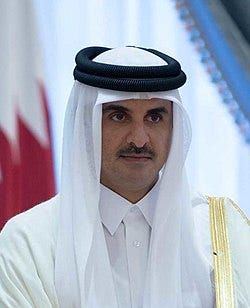
Essentially, of course, by normal standards, this was an act of war against Qatar, since it was an attack on its capital, it killed a member of Qatar’s internal security forces, and injured an unspecified number of other Qataris.

Why did Netanyahu do such a thing? Because, he said, the Israelis had identified members of Hamas lurking inside the targeted building in Doha.
Mossad, Israel’s security agency, of course, knows what color of panties your closest family members are wearing right at this instant, so it’s likely the Hamas dudes were hiding in the building, but wow, this news item skipped across our news feeds with nary a comment aside from the usual BlueSky outrage.
Sheikh Mohammed bin Abdulrahman al-Thani, of the House of Thani,2 and Qatar’s prime minister, wasn’t happy: “We have reached a decisive moment where there must be a response from the entire region to such barbaric actions,” said he.
The mad clown took a break from his golf game to declare his innocence in the matter, saying through his usual garbled nonsensical word salad that it was sort of a regrettable situation but that he didn’t learn about it in time to use his commanding presence to stop Netanyahu, who, as we all know, would have certainly done so had the Dear Leader expressed an objection.
Between this and Russia’s drone attack in Poland, the world’s teeth are clattering.
Who or what is Qatar?
You may remember Qatar as the giver of gifts, a great ally of the United States that presented a gold-plated version of a 747-8 aircraft to the mad clown to use as Air Force One.3 This raised all sorts of ethical and security questions, and was quickly forgotten during one of the various shit storms perpetrated by the pedoführer’s regime.
I like to remind folks, though, that history is important, so let’s get to know our Qatari friends, shall we?

Qatar is a small monarchy that sits on the eastern shores of the Arabian Peninsula.
It’s governed by the House of Thani. The House of Thani does things the old-fashioned way as part of an effort to make the world great again. For example: The man that the Qatari government refers to as the Father Emir, Hamad bin Khalifa Al Thani, wrested control of the Qatari government from his dad in a 1995 coup.4 Luckily for Dad, the coup was bloodless and was mostly handled by lawyers.
His grandson has since replaced his son, but he was nice about it. Yay! A smooth succession!
It’s a very rich little nation, because it has the good fortune of sitting on a gold mine of old dinosaur blubber, or whatever the hell it is that oil is made from. I don’t even know, do you?5
Anyhoo, this means that the House of Thani is also very rich. Various Thani types can be seen regularly frolicking in Monaco on yachts containing bevies of women wearing barely there thongs, while the Qatari government imposes its ad hoc sharia law on its 2.7 million residents, most of whom are from other countries and are there to service the needs of the 313,000 native Qatari.
Many of those foreign residents are there under questionable conditions to build things like gleaming skyscrapers that would put Chicago or New York to shame.

Other residents are from places like the Philippines. They are there to clean big houses and prep for events like the 2022 World Cup, also under questionable conditions.6
Americans are also occasional residents/visitors. They are there to either make money or swing from skyscrapers like Tom Cruise, or just to be able to say at soiress in the Hamptons, “Yes, I was in Doha. It’s surprisingly refreshing. I even wore a bikini at the beach! Would you believe it?”
This is how America measures people during this gilded age. It’s a glorious thing.
The beginnings
Qatar has come a long way since the days Pliny the Elder first alerted the Roman world of Qatar’s existence around 50 AD or so. He called its people the Catharrei.
Pliny the Elder was the first-century Roman world’s Heather Cox Richardson, most likely without the progressive bent.
One of his major claims to fame was writing a twenty-volume account of the Germanic wars. That had to be a fun read, so it’s a shame it’s lost to history. People just weren’t careful about preserving things in those days.
Ptolemy, aka Mr. Everything,7 was the next person we know of to document Qatar, about a century after Pliny. Ptolemy was so smart that he probably realized that the name he came up with for the little peninsula jutting out of the Arabian peninsula, Catara, would become the etymological basis for the name “Qatar.”
Linguists prefer to say that the nation’s name is derived from muqāṭarah, which was a system used in Qatari markets through which customers purchased goods from closed containers, without traditional weights or measures. Some other linguists say the word is derived from a word from the local dialect, qiṭār, which means camel train.
I’m going with Ptolemy, if only because the linguists can’t make up their minds, and because they’re probably overthinking this.
Qatar became Islamic in 628 AD when Muhammad, who was known for his persuasive measures, politely asked that they convert.
They were pretty much left alone, mostly under the control of the Abbasid Caliphate (and a few other ancient kingdoms), until the Ottomans paid them a visit after the Portuguese seized control. Nobody on earth wanted anything to do with the Portuguese in those days aside from the Portuguese, so the good people of Qatar welcomed the Ottomans, who tried to absorb them into their empire, but who were defeated by the Portuguese, leaving the port of Doha in Portuguese hands from the early 1500s to the mid-1600s.
The Portuguese remained until about 1670, when conflicts with the Ottomans stretched Portuguese resources beyond their capacity. The Ottomans tried to step in but were thrown out by the Bani Khalid tribe. It wasn’t much of a fight because the Ottomans didn’t much care. The port of Doha was the only thing of value there, since nobody yet knew anything about the carbon-based gold under the soaring desert sands.
There was a lot of fighting and bickering after that between various Arabian groups until the Al Thani House, the alpha family of the area, agreed to again cede control of the port of Doha, and by extension, surrounding Qatar lands (almost everyone lives in Doha, since the surrounding area is difficult desert), to the Ottoman Empire, which controlled the area from 1871–1915.
The Ottomans were on the wrong side of World War One, though, so they lost the land to the British, who controlled the port from 1915 to 1971.
The Brits replaced the lucrative pearl trade of the port of Doha with an even more lucrative oil export business in 1949.
When I was a young lad, I collected stamps. This was how I learned geography and even a bit of history.
Or, fund me one time if you hate the subscription model:
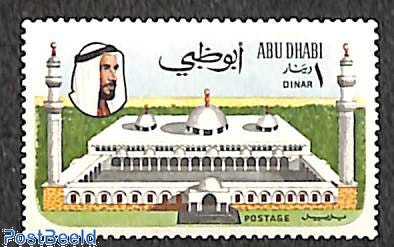
I remember these stamps in particular:

I was a curious lad, so I sought out the reasons in those pre-Internet days why such a stamp entered my stamp collection.
Such was my first encounter with not just Qatar, but many of the small kingdoms lining the Arabian coast.
I discovered that the Brits didn’t want to continue directly governing the area as the 1970s rolled around. The area was becoming restive, especially in light of conflicts with Israel. Bad things were bound to happen, so the British, who also controlled such small kingdoms as Abu Dhabi, Ajman, Bahrain, Dubai, Fujairah, Ras Al Khaimah, Sharjah, and Umm Al Quwain, bailed, but with some “guidance.”
Under said guidance, all those small emirates except Bahrain and Qatar went on to form a new nation called United Arab Emirates. When you see someone walking around with a shirt or sports jersey that says “Emirates,” that’s a reference to their national airline.
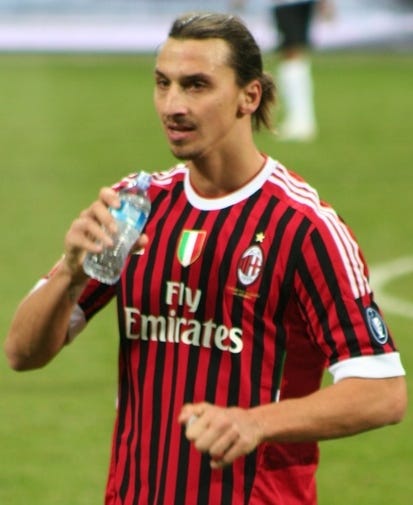
All of these little places lining the Arabian Peninsula coast would have been household names in the 1970s if everyone had known how cool their stamps were:
Bahrain and Qatar went their own way, with Bahrain becoming the home of a major U.S. military base and Qatar becoming home to Al Jazeera, a widely loathed (in the U.S.) media company that hired many of its early broadcasters from the BBC.
Al Jazeera went on to become one of the better sources for news, but American politicians silenced it and worked to keep it off cable provider feeds as part of the long-running and bipartisan effort to sow maximum fear over the 9/11 attacks.
The world, you see, is complicated. We are all connected by modern technology and common interests, even when we all argue. Removing voices of opposition only breeds tunnel vision. But I digress.
To continue: Oil exports enabled all of these emirates to become financial powerhouses. Eventually, they owned everything from huge financial firms to English and European soccer teams.
After Iraq’s Saddam Hussein invaded and quickly conquered the largely defenseless nation of Kuwait, another petrostate, he set his sights on Saudi Arabia. He did this even though the U.S. and other nations responded to the Kuwait invasion with a counterattack that depleted his main invasion force in southern Kuwait, from where he was trying to launch his attack.
Qatar joined the fracas by sending in Qatari tanks when Saddam attacked the Saudi city of Khafji.
This strengthened an existing alliance of sorts, previously fed by oil.
The geopolitics of the area works something like this:
The various oil states, including Saudi Arabia, align themselves primarily with the United States, their primary customer. For a long time, this meant quietly cheering (some would say praying) for Israel’s destruction when Israel was threatened by the vast forces surrounding it: Hezbollah in south Lebanon, Hamas in Gaza, Iran to the east, and so on. But that cheering was very much on the down low. Mostly whispered about on yachts filled with bikini-clad jihadist warrior women.
This quiet cheering for Israel’s exodus from the world stage was on the verge of changing shortly before Hamas attacked Israel on October 7. There is considerable evidence that Netanyahu had been warned about the attack (remember, Mossad knows what color underwear you are wearing, like, right now).
It was at first difficult to understand his motives beyond the fact that he was up on criminal charges (like someone else we know), because the oil states were warming up to the idea of normalizing relations with Israel just before the Hamas attack. It seems clear since then that his intent was the full demolition of Gaza and its people.
Hamas’ motives were clear enough. The oil states’ detente with Israel could prove to be an existential problem.
In recent years, Qatar has become a peace broker as it has acquired powerful friends in the West who enjoy slurping its oil and appreciate its pro-Western foreign policy. Qatar’s motive is very simple:
So they’ve sort of taken on the Rodney King mantra, “People, I just want to say, you know, can we all get along?” It makes money with its relationship with Israel, too. It balances this by taking a mostly hands off approach to Al Jazeera, which has, since the Gaza atrocities, been somewhat vocal in its opposition to Israel.
This is the easiest path to financial prosperity, especially when all you need to do is stick a pipe into the ground and watch it spit out money.
For this reason, you can expect a few more complaints from the Qatari government about Israel’s attack. Then, its government will quietly slide back to its main purpose: making money from oil, and hope (and pray) that the mad clown in the United States doesn’t burn everything to the ground.
Thanks for reading!

Footnotes
Based on reports that 64,000 people have died in the revenge killings of the October 7, 2023, Hamas attacks.
Jr, Bernd Debusmann. 2025. “US Begins Preparing Qatari Jet to Be Used as Air Force One.” Bbc.com. BBC News. July 28, 2025. https://www.bbc.com/news/articles/cwy5lp4v594o.
Contributors. 2020. “Palace Overthrow of Khalifa Bin Hamad al Thani.” Wikipedia.org. Wikimedia Foundation, Inc. September 14, 2020. https://en.wikipedia.org/wiki/1995_Qatari_coup_d%27%C3%A9tat.
Nah, I guess not dinosaurs. Poo! I always liked that story.
“Oil and Petroleum Products Explained - U.S. Energy Information Administration (EIA).” 2025. Eia.gov. 2025. https://www.eia.gov/energyexplained/oil-and-petroleum-products/.
Hopefully, this link won’t be taken down for DEI reasons.
News, BBC. 2022. “World Cup 2022: How Has Qatar Treated Foreign Workers?” Bbc.com. BBC News. March 30, 2022. https://www.bbc.com/news/world-60867042.
Ptolemy was a mathematician, astronomer, astrologer, cartographer/geographer, and music theorist. He’s the first known superstar in mathematical astronomy, applying equations to geocentric orbits and writing math equations that seemed far beyond the reach of most others of his day.
Contributors. 2001. “2nd-Century Roman Mathematician, Astronomer, Geographer.” Wikipedia.org. Wikimedia Foundation, Inc. September 28, 2001. https://en.wikipedia.org/wiki/Ptolemy.
It's been a less than stellar day. So forgive me.
I always assumed Ms. Cox Richardson made 5mil on this platform. I was wrong. It's more like 2mil. I assume also too and furthermore a 20 percent paying rate. Lotsa bucks for a few paras and a rehash of free news. You're doing something wrong!
I only read history for fun.
I learned long ago to outfox Mossad. They know everything if you wear underwear.
Problem solved!
I forgot Qatar is a skin tag.
Ok I'll stop.
This was interesting.
Thanks. I'm still pretty new here. Maybe I'll reach $100 someday lol.
Not a lot of stellar days lately. Hang in there.